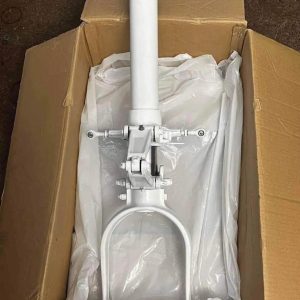
The Cessna Nose Gear Strut Assembly provides structural support, shock-management capability, and ground-handling stability for an appropriately verified Cessna aircraft installation.
A Cessna Nose Landing Gear Strut may form part of a broader Cessna Nose Gear Assembly, while the phrase Cessna Landing Gear Strut can describe different positions or configurations depending on the aircraft model.
Whether described as an Aircraft Nose Landing Gear Assembly or Cessna Shock Strut Assembly, the unit should be evaluated as part of the complete airframe and landing-gear system.
A Cessna Nose Wheel Strut must maintain appropriate geometry and movement for predictable ground handling.
The Cessna Steering Strut Assembly, Cessna Replacement Nose Gear, and General Aviation Landing Gear Parts keywords describe commercially relevant searches for maintenance and restoration projects.
Why Exact Landing Gear Identification Matters
A unit should not be accepted as compatible solely because it came from an aircraft within the same general Cessna family.
Informal descriptions such as complete or ready to install should be supported by an exact inventory.
Evaluating Landing Gear Structural Responsibilities
Actual load distribution depends on aircraft weight, center of gravity, tire pressure, landing technique, surface condition, and aircraft configuration.
Professional structural review protects the aircraft and the Replacement Nose Gear installation.
Understanding the Cessna Shock Strut Assembly
Proper operation depends on correct servicing, internal condition, seal integrity, surface finish, alignment, and absence of contamination.
The aircraft’s actual loaded condition affects visible strut extension and should be considered during evaluation.
Nose Wheel Steering and Directional Control
The nose gear may interact with the aircraft steering system through collars, torque links, rods, springs, cables, stops, bushings, or other model-specific mechanisms.
Excessive turning can damage linkage, hoses, fairings, fork components, or internal strut features depending on the design.
Verifying Illustrated Parts Catalog Information
The buyer should compare the offered unit with current illustrated-parts, maintenance, and installation information.
Cross-reference information should be verified carefully and should include any required supersedures or installation changes.
Cylinder, Piston, and Sliding-Surface Inspection
A polished surface may still contain dimensional wear that requires measurement.
The cylinder bore, piston diameter, and relevant clearances may require professional measurement.
Evaluating Hydraulic Fluid Loss
Repeated wiping without correcting the source does not constitute proper repair.
Seal replacement should use components appropriate to the exact strut assembly and aircraft configuration.
Protecting Cessna Landing Gear Components
Corrosion may develop on external surfaces, inside bores, around fasteners, beneath paint, near mounting points, or within neglected fluid areas.
The component should be stored in a dry, controlled environment before installation.
Evaluating a Used Cessna Nose Gear
High-stress areas can include attachment points, fork transitions, axle regions, steering features, torque-link mounts, and previous repair locations.
Transparent impact history supports informed Cessna Front Landing Gear Assembly purchasing.
Wheel Fork, Axle, and Nose Wheel Components
The axle should remain dimensionally suitable, smooth, correctly secured, and free from severe wear or thread damage.
Used hardware should not be reused automatically without applicable inspection.
Torque Links, Bushings, and Pivot Points
Dimensional inspection supports a durable repair.
Pivot points should move freely without binding while remaining within acceptable play limits.
Evaluating Wheel Alignment and Steering Play
Nose-wheel shimmy can result from worn bushings, loose torque links, tire imbalance, wheel-bearing play, incorrect tire pressure, steering looseness, alignment issues, or structural wear.
Professional evaluation promotes smoother ground handling and longer component life.
Understanding Strut Inflation Procedures
Shock-strut servicing should follow the exact aircraft maintenance procedure for fluid type, quantity, pressure, extension, loading condition, and safety precautions.
Repeated pressure loss should prompt leak investigation rather than continual inflation.
Documenting Landing Gear Repair Work
The exact scope should be defined in the work records rather than assumed from the word overhauled.
A professionally overhauled unit should remain connected with the correct part and serial information.
Evaluating a Used Landing Gear Component
The seller should provide photographs of every side, including the cylinder, piston, fork, axle, torque links, steering features, mounts, hardware, identification markings, and damaged areas.
- Resolve identity, applicability, condition, and package-completeness questions before payment.
- Inspect or document corrosion, cracks, bends, scoring, pitting, leakage, chrome damage, worn bushings, loose pivots, elongated holes, damaged threads, fork alignment, and previous repairs.
- Require packaging that supports the strut and protects the piston surface, cylinder, fork, axle, steering components, fittings, identification markings, records, and loose hardware from impact, corrosion, and movement.
Protecting the Landing Gear Strut in Transit
The assembly should be secured in a rigid crate or suitable container that supports its weight without loading the piston, fork, fittings, steering components, or delicate surfaces.
Forks and mounting features should not be used as uncontrolled lifting points unless approved for handling.
Preparing a Stored Assembly for Service
The assembly should not rest directly on delicate fittings, the axle threads, polished surfaces, or unstable supports.
A stored assembly should not be installed solely because it was previously considered serviceable.
Connecting Steering and Structural Components
Surrounding structure should be inspected for cracks, corrosion, deformation, worn holes, and previous repair before installing the replacement assembly.
Disciplined workmanship supports reliable Cessna Front Landing Gear Assembly operation.
Any abnormal indication should receive prompt evaluation before further operation.
Reducing Landing Gear Wear
Consistent care supports dependable Cessna Nose Landing Gear Strut operation.
Recurring concerns should prompt system-level evaluation rather than repeated isolated adjustments.
Evaluating Used Aircraft Gear Pricing
The commercial value of a Cessna Nose Gear Strut Assembly depends on exact identification, aircraft applicability, completeness, physical condition, corrosion status, leakage, repair history, overhaul records, included hardware, and documentation.
Buyers should compare complete and documented packages rather than price alone.
Buying a Replacement Cessna Front Gear Assembly
The Cessna Nose Gear Strut Assembly may suit private aircraft owners, flight schools, maintenance organizations, restorers, aviation dealers, and general aviation operators seeking an identifiable landing-gear component.
Buyers should read more request current photographs, accurate measurements, transparent condition information, professional inspection details, protected freight arrangements, secure transaction terms, and qualified maintenance review.
Whether the assembly is purchased for maintenance, overhaul, restoration, spare inventory, resale, or an aircraft project, transparent information and qualified oversight provide the strongest foundation.
With prompt attention to leakage, scoring, corrosion, shimmy, tire wear, loose bushings, steering play, impact events, and abnormal compression, the installation can preserve its operating potential.